 English
 Pусский
 Français
 Español
 Portugues
 Deutsch
 lingua italiana
 العربية
 Melayu
 Filipino
 Монгол хэл
 dansk
dansk Bahasa indonesia
 日本語
日本語 한국어
한국어 Türk dili
 Tiếng Việt
 svenska
 Nederlands
 Norsk språk
What is Focusing in Microscope?
Focusing in a microscope is the process of adjusting the distance between the objective lens and the specimen to make the observed image clear, sharp, and well-defined. It is the most basic and essential operation for using a microscope correctly.
How Microscope Focusing Works
When light passes through the specimen and enters the objective lens, it forms an image inside the microscope tube. Focusing moves the stage or the lens up and down to align this image exactly with the focal plane of the eyepiece. Only when the light rays converge at the right position can you see fine details of the specimen clearly.
Two Main Focusing Adjustments
1.Coarse Adjustment
-
Moves the lens or stage rapidly over a large distance.
-
Used first to quickly find the general image of the specimen under low magnification.
-
Fast but rough; only for initial focusing.
2.Fine Adjustment
-
Makes tiny, precise movements.
-
Used after coarse focusing to sharpen the image.
-
Necessary for high-power observation and viewing tiny cell structures.
Type
Coarse Focus: This is the rough focus knob on the microscope. This knob is used to move the objective lenses toward or away from the specimen (see also fine focus). When using a microscope at 400x magnification or above, you would want to have both coarse focus and fine focus knobs in order to view a crisp and clearly focused image through your microscope.
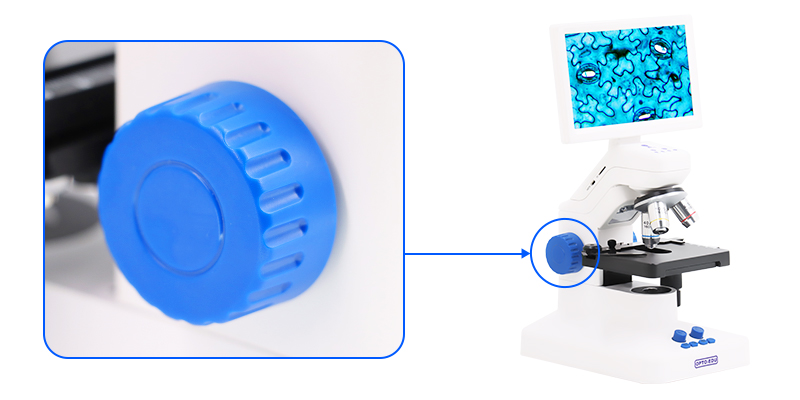
Independent-Axis Coarse and Fine Adjustment
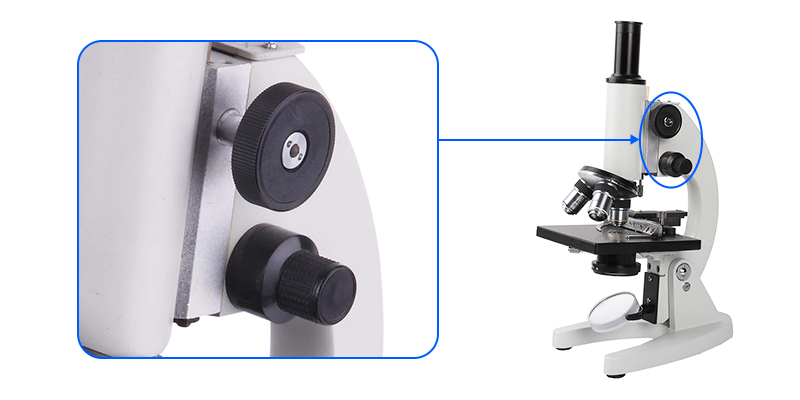
Coaxial Focus: A focusing system that has both the coarse and fine focusing knobs mounted on the same axis.
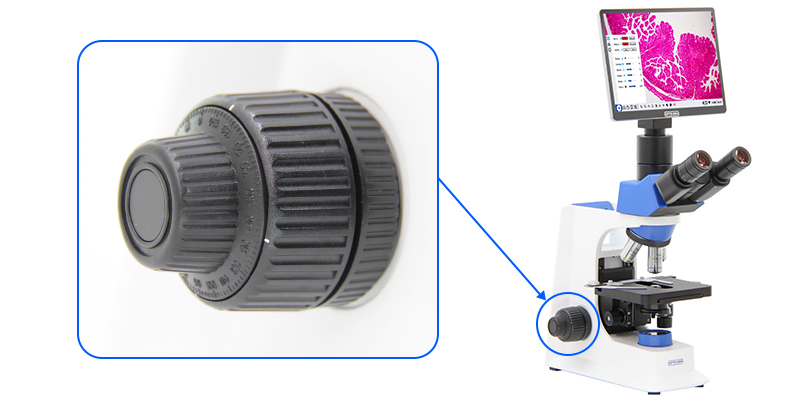
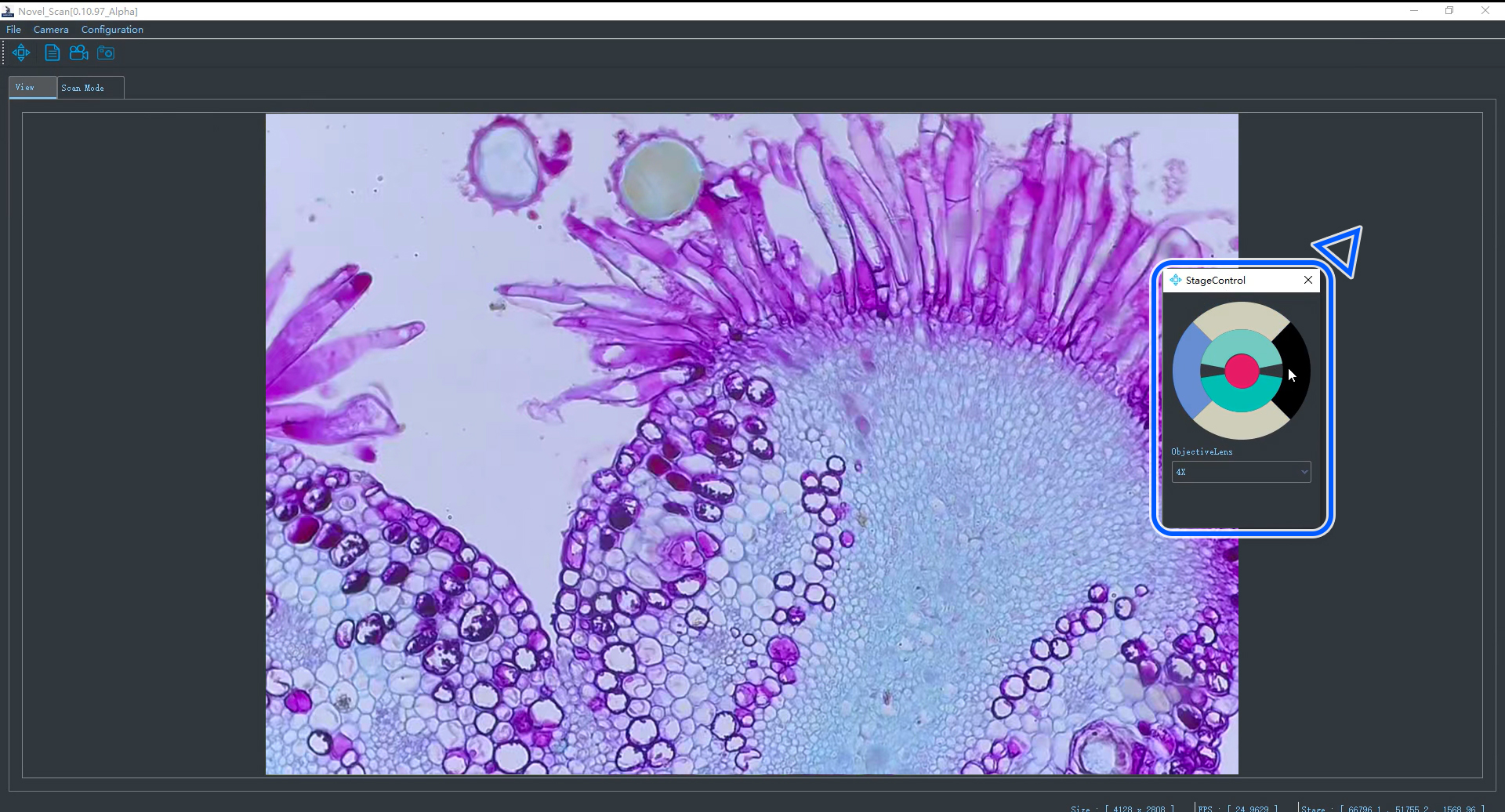
Electric Focus Adjustment
Computer-controlled focusing
Electric Control Focusing
Focusing controlled by the manual control box
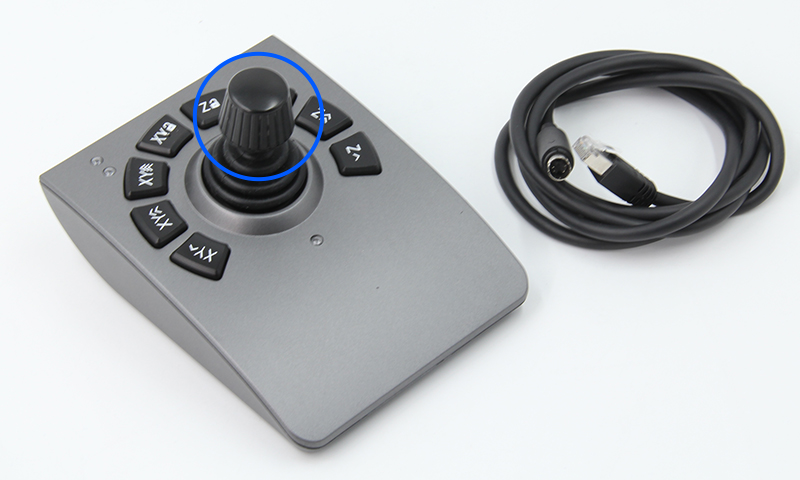
Parameter
Rough adjustment of travel
Rotate the coarse adjustment button to determine the maximum distance the worktable can move up and down
Fine tuning accuracy/grid value
Rotate the fine-tuning button once to adjust the distance the workbench moves up and down
Fine tune the itinerary
Rotate the fine-tuning button to achieve the maximum distance for the worktable to move up and down
Upper Limit Position
The upper limit of coarse adjustment (referred to as the "upper limit") is a safety locking device in the microscope focusing mechanism, used to limit the highest position of the coarse adjustment handwheel to move the stage (upright mirror) or objective lens (inverted mirror) upward, to prevent damage to the lens or slide.
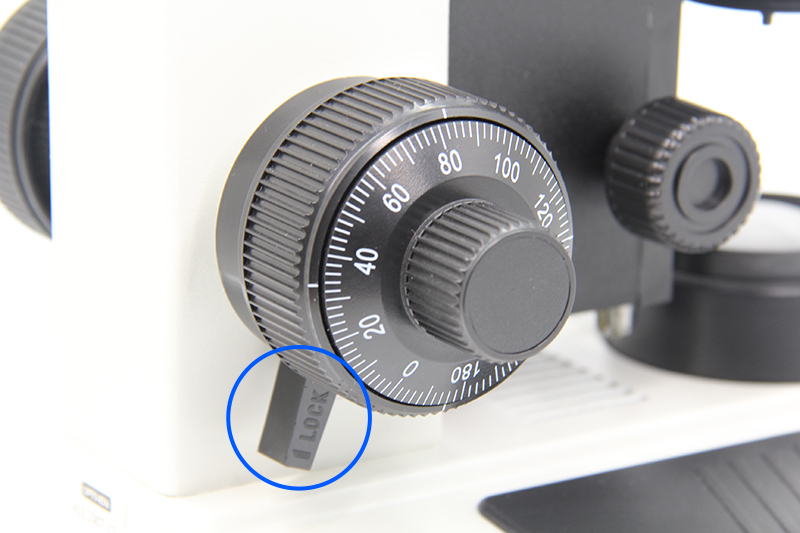
• Position: Usually located on the inside (left/right) of the coarse adjustment handwheel, it is a small rotatable knob/dial.
Adjustable Tightness
Coarse and fine adjustment of elasticity, also known as focusing damping adjustment, means that the damping force of the focusing handwheel can be adjusted:
Tighten → When the handwheel rotates, it feels heavy and does not shake;
Loosen → The handwheel rotates lightly and smoothly.
Barlow Lens
For Biological
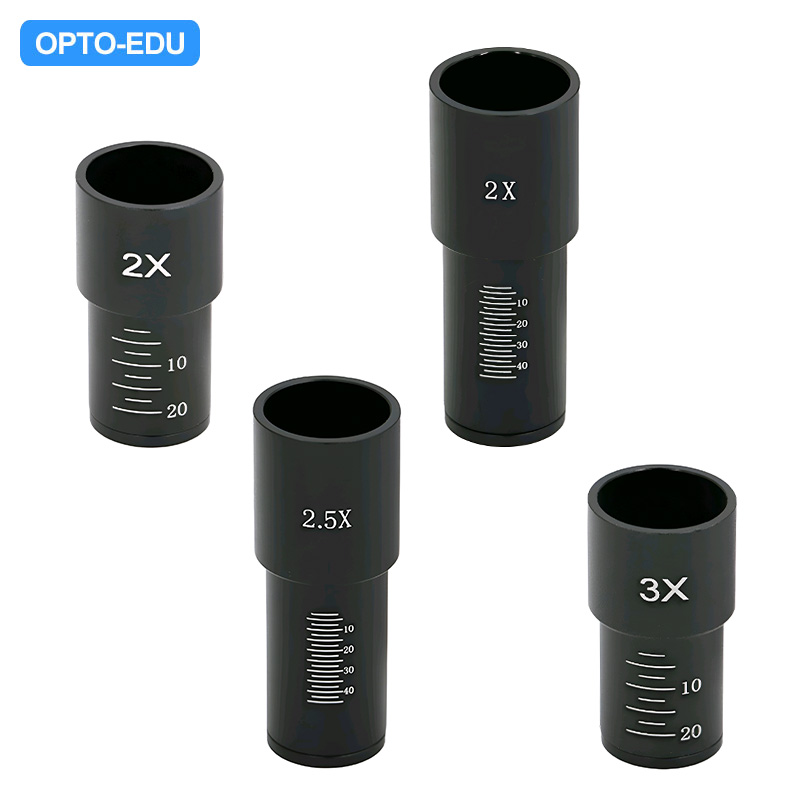
For Stereo
Barlow Lens Explained
A Barlow lens is a diverging lens that alters the focal length of a microscope and, therefore, the field of view. They also alter the working distance between the objective lens and the specimen, which is a critical variable for many applications such as PCB soldering and inspection.
A Barlow attaches to the bottom of the objective lens on a stereo (low power) microscope when there is a need for either more or less of one of the following variables:
-
Working Distance
-
Field of View
-
Magnification
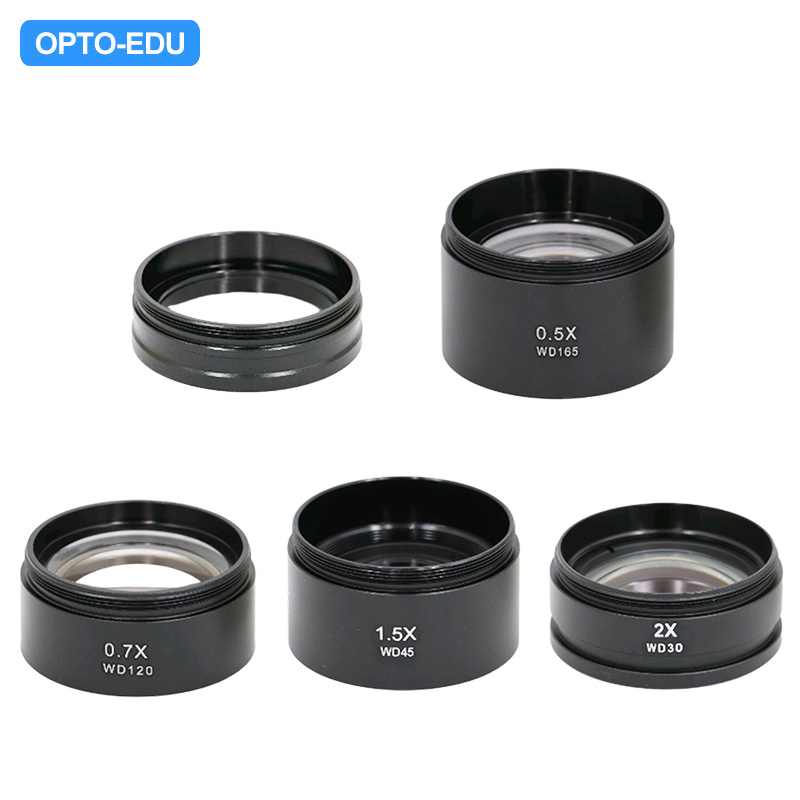
The most common type of Barlow lens is the Reducing Barlow. A Reducing Barlow reduces the magnification power of the microscope, but has the advantage of increasing the field of view and the working distance between the objective and the specimen. Reducing Barlows are typically 0.3x, 0.5x and 0.75x although other powers are available.
As an example, a 0.5x Barlow lens will halve the magnification power of the microscope, but it will double the size of the field of view. It will also increase the working distance between the objective and the specimen.
By the same token, a 2.0x Barlow will double the magnification and halve the field of view of a microscope. In other words, each different power Barlow has a proportionate effect on magnification and a direct inverse proportional effect on the field of view and working distance, as shown below.
|
BARLOW MAGNIFICATION CHART (values approx.)
|
|||||||
|
BARLOW (X)
|
WD (in)
|
EYEPIECE (X)
|
|||||
|
10
|
15
|
20
|
|||||
|
0.5
|
7.9
|
3.5
|
22.5
|
5.2
|
34
|
7
|
45
|
|
0.75
|
5.2
|
5
|
34
|
8
|
50
|
10
|
68
|
|
1
|
3.9
|
7X
|
45X
|
10.5X
|
67.5X
|
14X
|
90X
|
|
1.5
|
2.6
|
10
|
68
|
16
|
101
|
21
|
135
|
|
2
|
1.9
|
14
|
90
|
21
|
135
|
28
|
180
|
|
min
|
max
|
min
|
max
|
min
|
max
|
||


 Huang Xin