The Key To Micro World!

Opto-Edu (Beijing) Co., Ltd.100043Why Us (指向 公司信息, 格式不好编辑, 另起一个页面Why Us)F-1501 Wanda Plaza, No.18 Shijingshan Road, Beijing 100043, ChinaOpto-Edu (Beijing) Co., Ltd.100043Why Us (指向 公司信息, 格式不好编辑, 另起一个页面Why Us)F-1501 Wanda Plaza, No.18 Shijingshan Road, Beijing 100043, ChinaOpto-Edu (Beijing) Co., Ltd.Opto-Edu (Beijing) Co., Ltd.Opto-Edu (Beijing) Co., Ltd.Opto-Edu (Beijing) Co., Ltd.Opto-Edu (Beijing) Co., Ltd.Opto-Edu (Beijing) Co., Ltd.Opto-Edu (Beijing) Co., Ltd.Opto-Edu (Beijing) Co., Ltd.Opto-Edu (Beijing) Co., Ltd.Opto-Edu (Beijing) Co., Ltd.Opto-Edu (Beijing) Co., Ltd.Opto-Edu (Beijing) Co., Ltd.Opto-Edu (Beijing) Co., Ltd.Opto-Edu (Beijing) Co., Ltd.Opto-Edu (Beijing) Co., Ltd.Opto-Edu (Beijing) Co., Ltd.Opto-Edu (Beijing) Co., Ltd.Opto-Edu (Beijing) Co., Ltd.Opto-Edu (Beijing) Co., Ltd.Opto-Edu (Beijing) Co., Ltd.Opto-Edu (Beijing

How to Select Auto Inverted Fluorescent Microscope?

Inverted Fluorescence Microscope is one of the most important tools for today’s Cell Biology Lab. It can let you see live cells in culture dishes just like normal inverted microscopes do, but it also makes finding exactly where certain proteins, parts inside cells called organelles, and even single molecules happen by using special kinds of light that glow – this is known as fluorescence imaging. But when there are different levels of automation (manual, encoded, fully motorized) and various types of light sources (halogen, LED, mercury lamp).

I. Principles and Applications of Inverted Microscopes

1.1 Core Working Principle
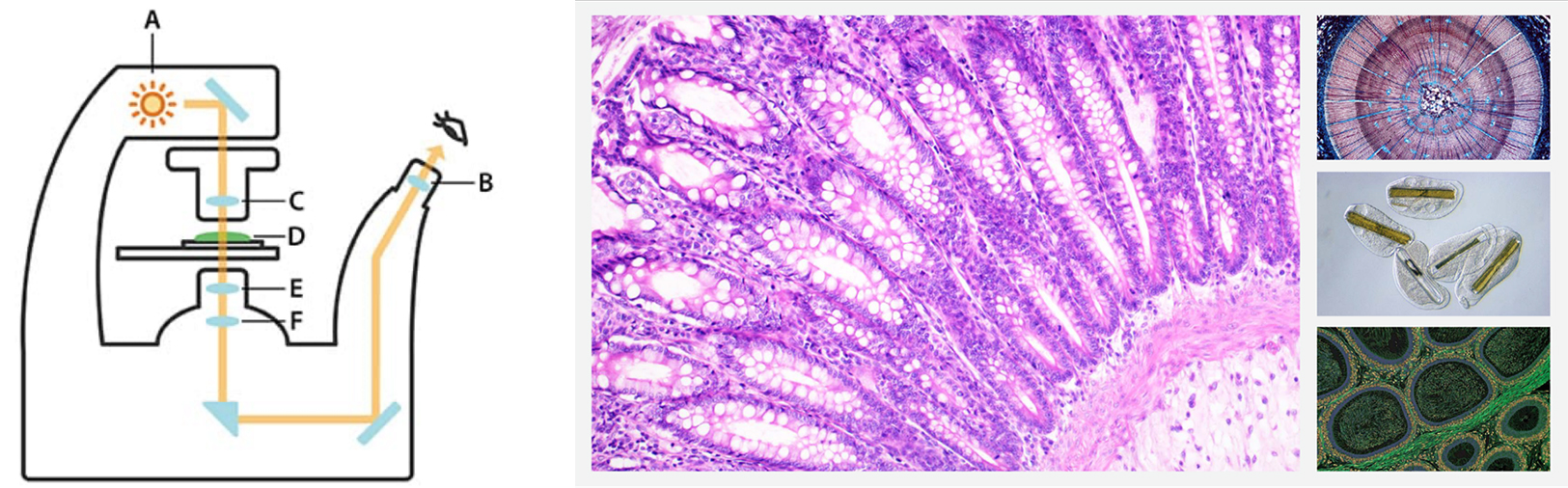
Inverted Microscope: The inverted microscope has its objective lens placed under the stage and the condenser/light source above. Light goes down via the transparent bottom of a culture dish, interacts with the specimen, then enters the objective from underneath. So we can see live cells in culture vessels without having to move them around or fix them.
Inverted Fluorescent Microscope: Add an epi-fluorescence path, where the excitation light goes through the objective to the sample and then emitted fluorescence comes back via that same objective. A filter cube (excitation filter, dichroic mirror, emission filter) selects certain wavelengths so we can see fluorescently labeled molecules inside live cells.


1.2 Core Application Fields

Inverted Microscope:

Inverted Microscope

NO.

Application

What It Does

1

Live cell observation

Check cell health in culture flask

2

Phase contrast

See unstained cells without dyes

3

Time-lapse imaging

Track cell migration over hours

4

Body fluid examination

Screen CSF for abnormal cells

5

Micromanipulation

Microinject DNA into embryos

Inverted Fluorescent Microscope

Add the belowing capabilities:

Inverted Fluorescent Microscope

NO.

Application

What It Does

1

Protein localization

See where a specific protein lives

2

Multi-color imaging

Label nuclei (blue), mitochondria (red), cytoskeleton (green) simultaneously

3

Calcium imaging

Track neuron firing with Fluo-4 dye

4

FRET

Detect protein-protein interactions

5

High-throughput screening

Scan 96-well plates for drug hits

6

FRAP

Measure protein mobility after photobleaching

II.Core Specifications of Our Inverted Microscope

2.1 Inverted Microscope:

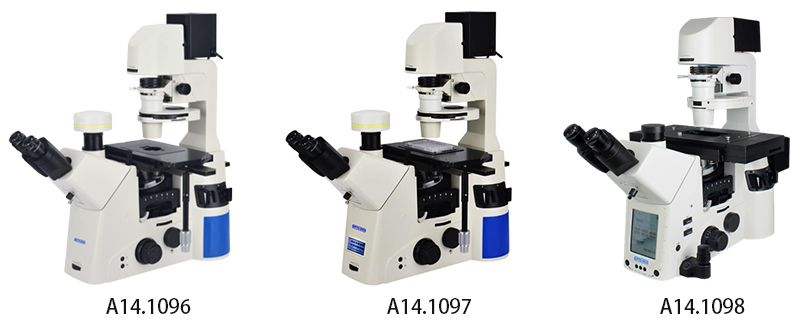
Code

A14.1096

A14.1097

A14.1098

Name

Inverted Biological Microscope, Manual, Semi-APO, BF+PH, DF/PL/DIC/FL

Inverted Biological Microscope, Semi-Auto, Semi-APO, BF+PH, DF/PL/DIC/FL

Inverted Biological Microscope, Auto, Semi-APO, BF+PH, DF/PL/DIC/FL

Featurre 1

Manual Research Level Inverted Biological Microscope For BF/PH, Optional DF/PL/DIC/FL

Semi-Auto Research Level Inverted Biological Microscope For BF/PH, Optional DF/PL/DIC/FL

Auto Research Level Inverted Biological Microscope BF+PH, Optional DF/PL/DIC/FL

Featurre 2

Trinocular Head With Built-in Bertrand Lens SW10x/22mm Eyepiece, Infinity Plan Semi-APO PH10x20x40x

Trinocular Head With Built-in Bertrand Lens SW10x/22mm Eyepiece, Infinity Plan Semi-APO PH10x20x40x

Trinocular Head With Built-in Bertrand Lens SW10x/22mm Eyepiece, Infinity Plan Semi-APO PH10x20x40x

Featurre 3

LWD Condensor N.A.0.55 W.D.26mm, With 6 Holes Phase Contrast Disc

4.3'' LCD Touch Screen, Coded Sextuple Nosepiece, Coded Multi Function Turret

5.7''LCD Touch Screen, Motorized Sextuple Nosepiece, Motorized X/Y/Z Stage, Motorized Phase Contrast Disc, Motorized Multi Function Turret

Featurre 4

Media Lens Magnification Switch 1.0x/1.5x, Video Port On Left/Rigth Side/Trinocular Port

Media Lens Magnification Switch 1.0x/1.5x, Video Port On Left/Rigth Side/Trinocular Port

Media Lens Magnification Switch 1.0x/1.5x CF, Video Port On Left/Rigth Side/Trinocular Port

Featurre 5

Transmit 12V100W Halogen Kohler Illumination, Brightness Adjustable

Transmit 5W LED Kohler Illumination, Brightness Adjustable

Transmit 5W LED Kohler Illumination, Brightness Adjustable


2.2 Inverted Fluorescent Microscope:

Code

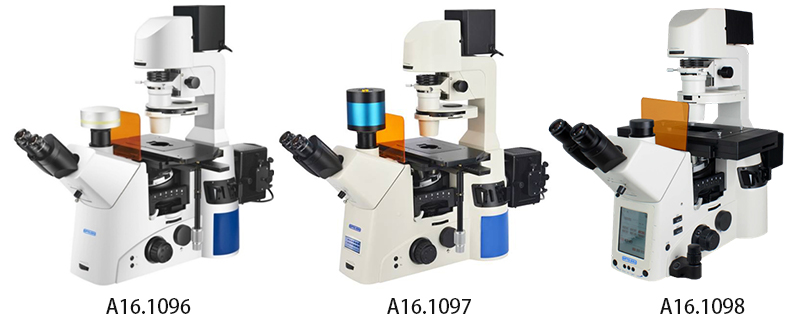
A16.1096

A16.1097

A16.1098

Name

Inverted Fluorescent Microscope, Manual, Semi-APO, BF+PH+FL, DF/PL/DIC

Inverted Fluorescent Microscope, Semi-Auto, Semi-APO, BF+PH+FL, DF/PL/DIC

Full Motorized Inverted Fluorescent Microscope, Full Auto, Semi-APO, BF+PH+FL, DF/PL/DIC

Featurre 1

Manual Research Level Inverted Fluorescent Microscope For BF/PH/FL, Optional DF/PL/DIC

Semi-Auto Research Level Inverted Fluorescent Microscope For BF/PH/FL, Optional DF/PL/DIC

Auto Research Level Full Motorized Inverted Fluorescent Microscope For BF/PH/FL, Optional DF/PL/DIC

Featurre 2

Trinocular Head With Built-in Bertrand Lens SW10x/22mm Eyepiece, Infinity Plan Semi-APO PH10x20x40x

Trinocular Head With Built-in Bertrand Lens SW10x/22mm Eyepiece, Infinity Plan Semi-APO PH10x20x40x

Trinocular Head With Built-in Bertrand Lens SW10x/22mm Eyepiece, Infinity Plan Semi-APO PH10x20x40x

Featurre 3

LWD Condensor N.A.0.55 W.D.26mm, With 6 Holes Phase Contrast Disc

4.3'' LCD Touch Screen, Coded Sextuple Nosepiece, Coded Multi Function Turret

5.7''LCD Touch Screen, Motorized Sextuple Nosepiece, Motorized X/Y/Z Stage, Motorized Phase Contrast Disc, Motorized Multi Function Turret

Featurre 4

Media Lens Magnification Switch 1.0x/1.5x, Video Port On Left/Rigth Side/Trinocular Port

Media Lens Magnification Switch 1.0x/1.5x, Video Port On Left/Rigth Side/Trinocular Port

Media Lens Magnification Switch 1.0x/1.5x CF, Video Port On Left/Rigth Side/Trinocular Port

Featurre 5

Transmit 12V100W Halogen, Reflect 100W Mercury Fluorescent Light With B,G,U Filters

Transmit 5W LED Kohler Illumination, Reflect 100W Mercury Fluorescent Light With B,G,U Filters

Transmit 5W LED Kohler Illumination, Reflect 100W Mercury Fluorescent Light With B,G,U Filters


III.Guidelines for Selecting the Right Inverted Microscope

To select the appropriate inverted microscope, you should consider your specific application requirements.

3.1 Step 1: Choose Based on Sample Type and Fluorescence Needs

Only if you want to watch live cells or culture samples that have not been fluorescently labeled (for instance, the shape of a cell, whether it is growing or dividing, how quickly it fills up a gap): pick an Inverted Biological Microscope from Code A14.xxxx series. This group contains Brightfield(BF) and Phase Contrast(PH), optional Darkfield(DF), Polarization(PU), DIC, Fluorescence(FL).It’s good for normal cell cultivation watching.
For observing fluorescently labeled specimens such as immunofluorescence or GFP-transfected cells: You should use the Inverted Fluorescent Microscope (Code A16. xxxx series). The series includes BF and PH along with epi-fluorescence illumination path (100W mercury lamp with B,G,U filter cubes) allowing direct fluorescence observation and optional DIC and other contrast methods.

3.2 Step 2: Choose the Automation Level Based on Operating Habits and Throughput Needs

Each of the two main categories offers three automation levels,Manual , Semi-auto and Full-auto.

3.2.1 Manual

For budget-constrained, easy-to-use, or fixed-observation-position users
Representative models: A14. 1096 (non-fluorescence), A16. 1096 (fluorescence)
Best for: Teaching labs, basic research, low sample throughput, people who don’t often change how they watch things.

3. 2.2 Semi-Automatic

Suitable for those that have to work in the dark and record parameters
Representative models: A14. 1097 (non-fluorescence), A16. 1097 (fluorescence)
Best for: Labs which often switch objectives/contrast methods, wanting fewer errors and needing repeatable experiment records.

3. 2. 3 Fully Automatic

For High-throughput, complicated experiments, remote control, image stitching
Representative models: A14. 1098 (non-fluorescence), A16. 1098 (fluorescence)
Best for: High-throughput screening, time-lapse imaging, 3D imaging, multi-well plate automated scanning, imaging platforms requiring third-party software integration.
In short start from fluorescence needs choose automation level then match your budget.

Conclusion

The choice of an inverted microscope is based on its application, how often it will be used, if there’s a need for automation and the budget. Our 6 models all have the same optical platform and similar mechanical designs; together they form a full set from basic education through to high end research, standard brightfield up to advanced fluorescence imaging.
We are dedicated to R&D and production of precise optical devices, offering dependable, effective and economical gear along with complete technical assistance and post-sale care. For further questions or help choosing something specific, please reach out to us. We back your studies and testing with solid solutions.

online service

online service
We are here online to support!

Send Message

*
*
*
*
*
7
close
7

Service

Scan the QR code Close
qr code

INQUIRY LIST

Empty List

COMPARE

Empty List

Advanced Cookie Settings

Essential Cookies

These cookies enable core functionality such as security, verification of identity and network management. These cookies can’t be disabled.

Enable Marketing Cookies

These cookies are used to track advertising performance, consent to the sending of advertising-related user data to Google, and consent for the website to serve personalized advertising to provide more relevant services.

Enable Functional Cookies

These cookies collect data to remember choices users make to improve and give a more personalised experience.

Enable Analytics Cookies

These cookies help us to understand how visitors interact with our website, discover errors and provide a better overall analytics.

Essential cookies can't be disabled.