 English
 Pусский
 Français
 Español
 Portugues
 Deutsch
 lingua italiana
 العربية
 Melayu
 Filipino
 Монгол хэл
 dansk
 Bahasa indonesia
 日本語
 한국어
 Türk dili
 Tiếng Việt
 svenska
 Nederlands
 Norsk språk
How to Select OPTO-EDU Fluorescent Microscope?
Seeing is believing, OPTO-EDU Fluorescence Microscope, the key to the micro world
|
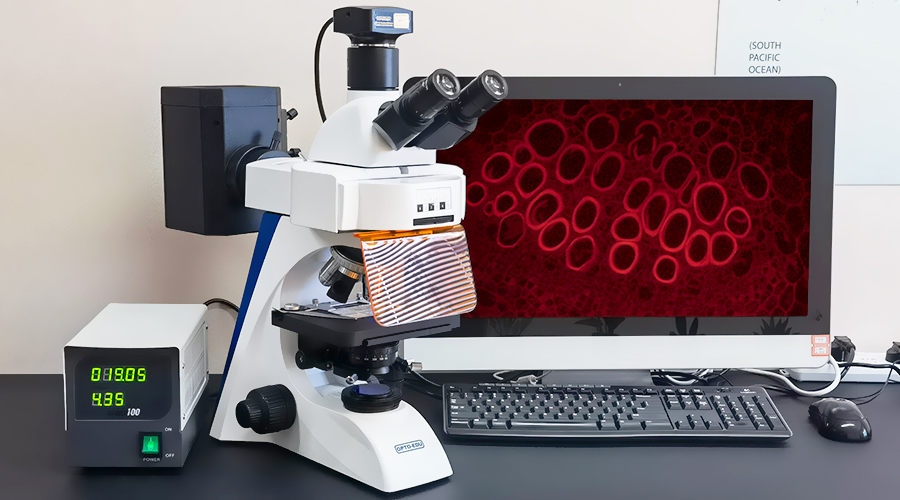
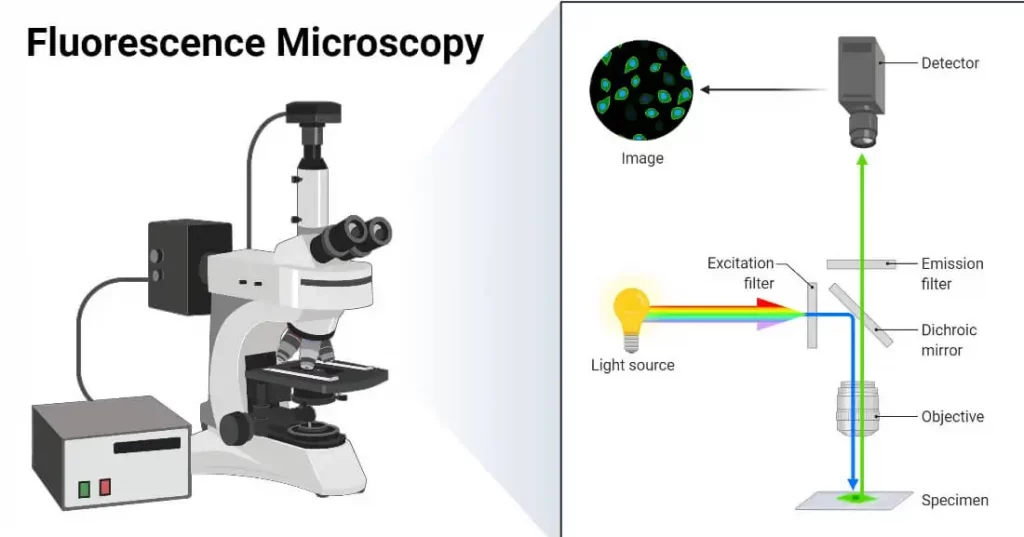
What is Fluorescent Microscope There are many options when purchasing a fluorescence microscope, and there are many factors to consider before deciding. The buyer's guide How to Select discusses how fluorescence microscopes work, what they can be used for, and what to consider when selecting a system for your research needs. Fluorescence microscope: Fluorescence microscope uses light of a specific wavelength as a light source to irradiate the object to be inspected to make it emit fluorescence, and then observe the shape and location of the object under the microscope. |
|
The concept of fluorescence is critical in fluorescence microscopy. That is, molecules absorb light of one wavelength and then emit light of a longer wavelength. Scientists began using fluorescent dyes to stain tissue in the 1930s, and fluorescently labeled antibodies allow scientists to fluorescently label various proteins. Observing fluorescent proteins or dyes at the cellular and subcellular level has become a workhorse of modern biology. Over the past few decades, scientists have developed a number of fluorescence microscopy-based imaging methods that can image not only where molecules are located, but also how they move and interact. |
|
Fluorescence microscopy is used to study the absorption and transportation of substances in cells, the distribution and localization of chemical substances, etc. Some substances in cells, such as chlorophyll, can fluorece after being irradiated by ultraviolet rays; although some substances themselves cannot fluorece, they can also fluorece after being stained with fluorescent dyes or fluorescent antibodies after being irradiated by ultraviolet rays. One of the tools for qualitative and quantitative research on such substances Based on the above technologies, OPTO-EDU has developed a series of fluorescence microscopes for laboratory, teaching and clinical use in hospitals. Fluorescence Microscope's Three Subsystems 1. Microscope Optical System The main function of the optical microscope system is to magnify the observed object from several times to thousands of times through a series of optomechanical systems. Cells, etc. can be clearly displayed in front of our eyes. OPTO-EDU can provide upright microscopes and inverted microscopes as options. For viewing biological slices, you can choose an upright fluorescence microscope |
|
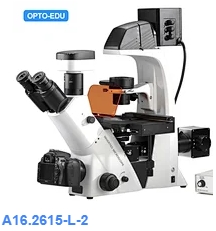
If observing living cells, it is recommended to use an inverted fluorescence microscope. It is especially suitable for microscopic observation of living cells and cell culture in vitro. |
|
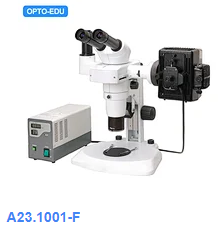
To observe the real object, it is recommended to use a stereo fluorescence microscope |
|
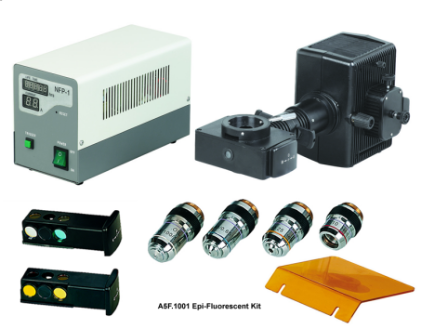
2. Fluorescence Epi-illumination System The light source is a key component of a fluorescence microscope and plays a vital role. OPTO-EDU's professional design and exquisite craftsmanship make fluorescence observation more effective with less effort. Mercury lamps and LED light sources provide different excitation light irradiation. ● Mercury Fluorescent Light Source: The most common light source, which contains a gas such as vaporized 100W mercury and emits white light. The spectrum is broad. Works with a wide variety of samples and dyes. But the disadvantages are also obvious. It needs to be preheated before use, and the service life of the mercury lamp bulb is short, only a few hundred hours, need to get replacement bulbs around $100-200. |
|
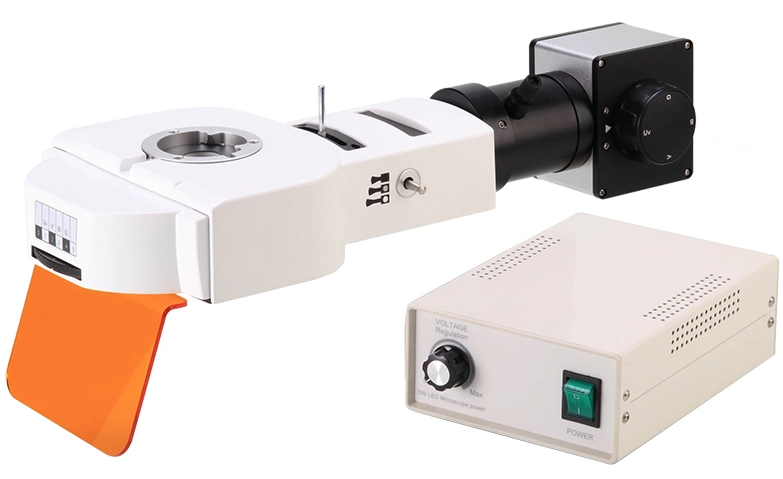
● LED Fluorescent Light Source: Because of its relatively narrow spectral band, more stable energy output, and more efficient excitation of samples. Although the applicable samples and dyes are less than mercury lamps, the advantage is that it saves electricity and has a lifespan of thousands of hours. It is suitable for occasions where the experiment is relatively long. Later maintenance saves time and effort. gradually become widely used. |
|
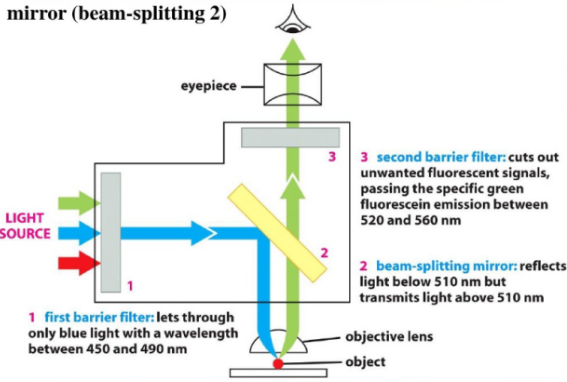
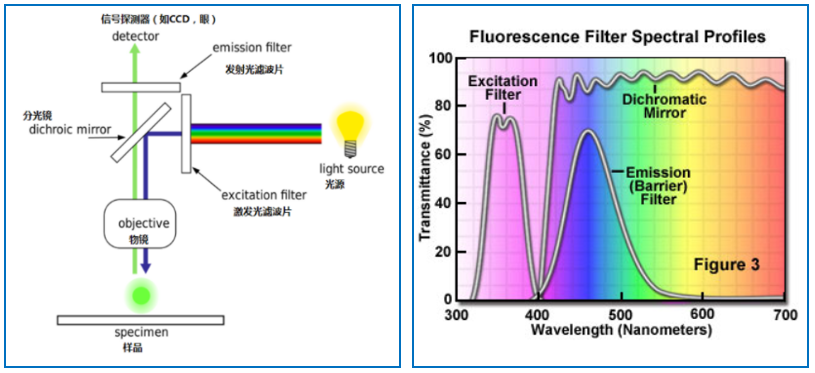
3. Fluorescent Filters System. When purchasing a fluorescence microscope, the filter system is the core part. Generally consists of three combinations, namely excitation filter, emission filter and dichroic mirror. , short-wavelength light excites to produce long-wavelength light. The most commonly used UV, B, and G filters excite fluorescent colors that are ultraviolet excitation produces blue light, blue light excitation produces green light, and green light excitation produces red light. |
|
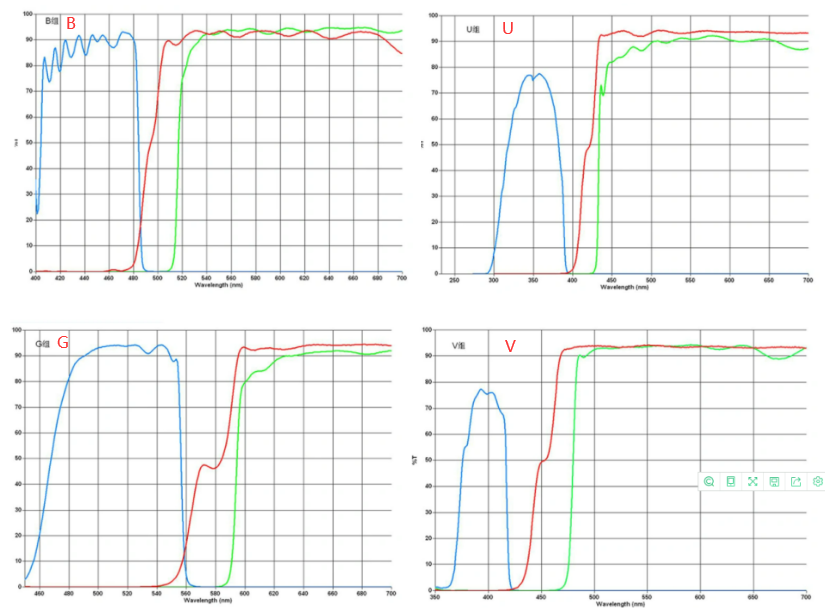
Based on long-term practice, we select some color filters suitable for your daily work. Among them, B, G, UV, and V are the most commonly used. We provide you with two schemes, B, G, color filter set and B, G, UV, V color filter set as the supporting filter system of OPTO-EDU fluorescence microscope. |
|
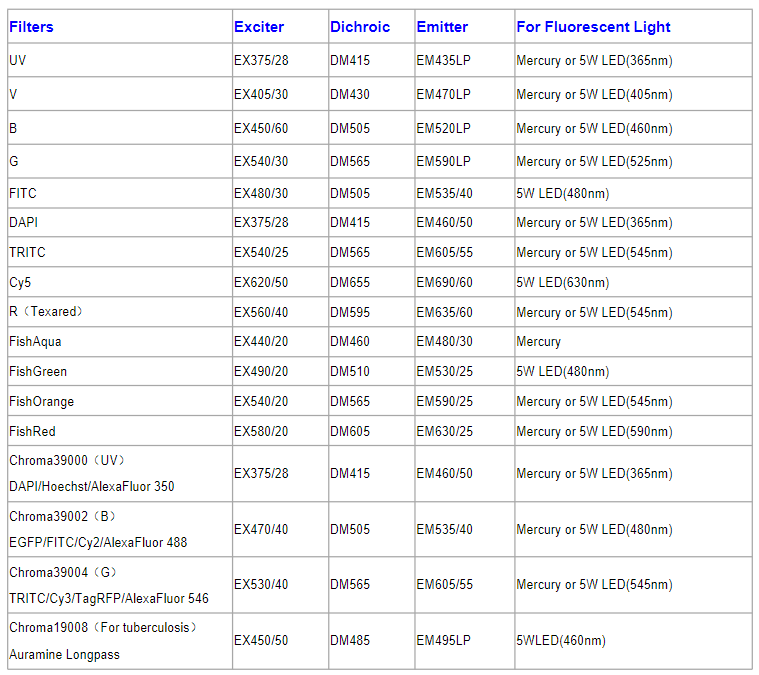
At the same time, the following fluorescent color filters can be selected at will to meet customer needs. Fluorescent Filters Optional |
|
For more fluorescent filters choice, please visit here and let us know your needs. We can get them for your customized fluorescent microscope: Chroma U.S.A. Optolong China https://optolongfilter.com/products/ Different combinations of the above three subsystems can provide different usage solutions. With our long-term production and sales experience. We provide some perfect combination schemes, namely microscope + fluorescent lighting system + filter system. Users can skip the complicated selection process above and directly choose a fluorescence microscope prepared by OPTO-EDU for you. If users are interested in choosing by themselves, we welcome you to visit the OPTO-EDU website. There are hundreds of fluorescence microscopes for you to choose from the A16 series. How To Select Fluorescent Microscope |
|
● Upright Mecury Light Fluorescent Microscope ● |
|
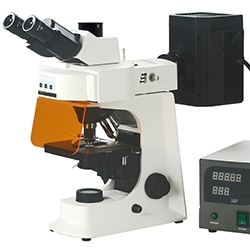
A16.2601-T4 Fluorescent Microscope, Trinocular, B/G/U/UV ● Six Holes Fluorescent Unit Can Hold Up To 5 Fluorescent Filter + Bright Field View ● 100W Mercury Fluorescent Light Source For Observe In Pathology, Clinical Lab Use ● Creative 100x Water Objective Instead Of I00x Oil Objective For Easy Use Without Oil ● High Rigidity Body Structure Design Supply High Steady And Easy Handle ● Different Color Available To Customize Your Model! |
 |
|
|
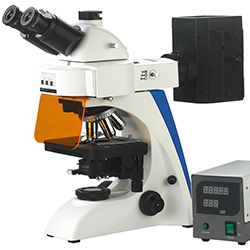
A16.2603-T4 Fluorescent Microscope, Semi-APO, Trinocular, B/G/U/UV ● Upgradeable to Semi-APO Fluorescent Objectives & 100x Water Objective |
|
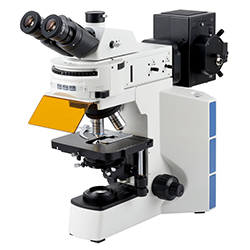
A16.0908 Fluorescence Microscope, Semi-APO Trinocular, PL10x/22mm, Quintuple, Infinity Plan Semi-APO Fluorescent 4x10x20x40x100x, Swing-out Condenser N.A.1.2/0.22, Mechanical Stage 175x145, Switchable X/Y Knob, 6V30W Halogen, Mercury 100W+ 6 Holes Disc Fluorescent OSRAM B,G,UV |
 |
|
|
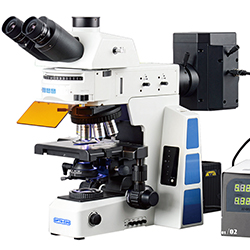
A16.0910 Research Fluorescence Microscope, Semi-APO, Upgrade BF+DF+PL+PH+FL+DIC ● Infinity Plan Semi-APO Fluorescent Microscope, Upgrade BF+DF+PL+PH+FL+DIC, Metallurgical |
|
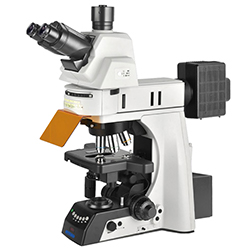
A16.1093-H Upright Fluorescent Microscope, Semi-APO, Semi-Auto, 12V100W Halogen ● Research Level Fluorescent Microscope With 6 Position Turret Disc Epi-Fluorescent Illuminator |
 |
|
● Upright LED Light Fluorescent Microscope ● |
|
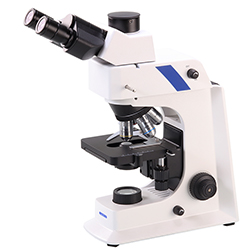
A16.2601-NL LED Fluorescent Microscope, Trinocular, B or G ● Built-in All-in-One Fluorescent Media Unit 5W LED With 1 or 2 Filters |
 |
|
|
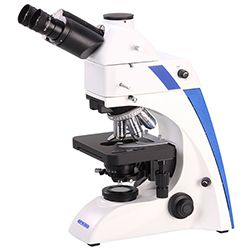
A16.2603-NL-2 LED Fluorescent Microscope, Semi-APO, Trinocular, B, G ● Built-in All-in-One Fluorescent Media Unit 5W LED With 1 or 2 Filters |
|
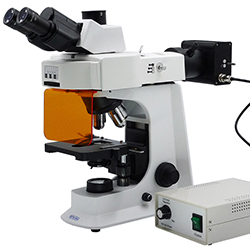
A16.2601-L-T4 LED Fluorescent Microscope, Trinocular, B,G,U,UV ● Six Holes Fluorescent Unit Can Hold Up To 5 Fluorescent Filter + Bright Field View |
 |
|
|
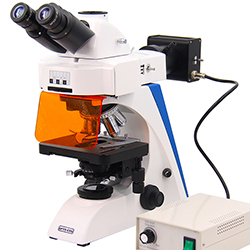
A16.2603-L-T4 LED Fluorescent Microscope, Semi-APO, Trinocular, B/G/U/UV ● Upgradeable to Semi-APO Fluorescent Objectives & 100x Water Objective |
|
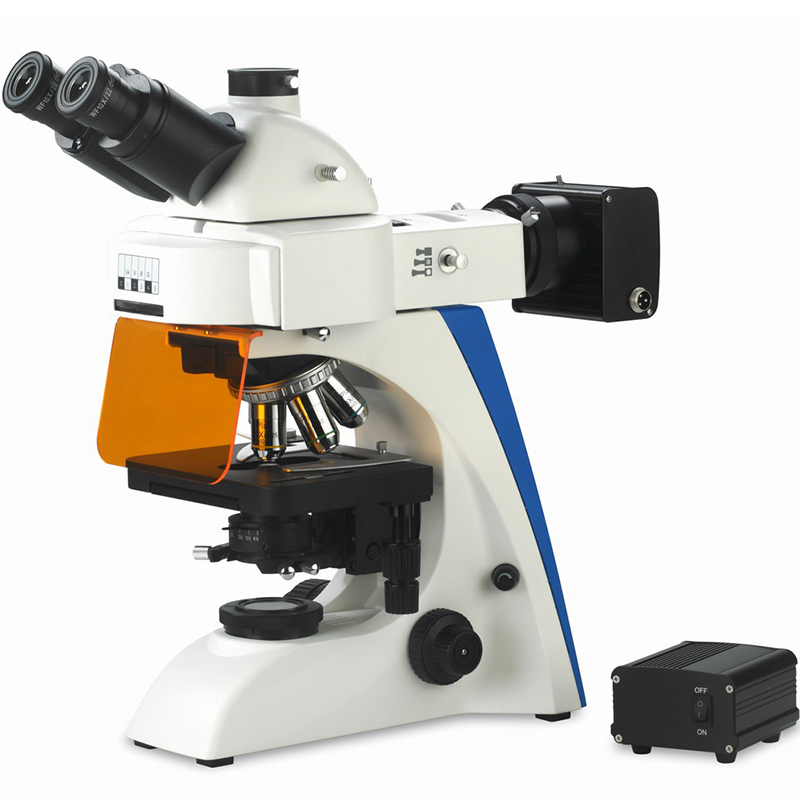
A16.2603-PL LED Fluorescent Microscope, Phthisis Checking Give full play to the advantages of LED fluorescence, a single-band fluorescence microscope dedicated to tuberculosis inspection ● Chroma Auramine O Fluorescent Filter, Speical For Phthisis Checking |
 |
|
● Inverted Mecury Light Fluorescent Microscope ● |
|
A16.2614-4 Inverted Fluorescent Microscope, B,G,V,VU ● 3 Holes Fluorescent Slide + 100W Mercury Fluorescent Illumination |
 |
|
|
A16.2702-4i Inverted Fluorescent Microscope, B/G/U/UV ● Epi Fluorescent 100W Fluorescent Light & OMEGA Filter B/G/U/UV |
|
A16.1096 Inverted Fluorescent Microscope, Manual, Semi-APO, BF+PH+FL, DF/PL/DIC ● Research Level Inverted Fluorescent Microscope For BF/PH/FL/DIC |
 |
|
● Invert LED Light Fluorescent Microscope ● |
|
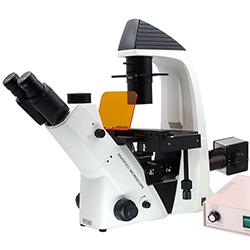
A16.2614-L-4 Inverted LED Fluorescent Microscope, Trinocular, B/G/U/UV ● 3 Holes Fluorescent Slide + 5W LED Fluorescent Illumination |
 |
|
|
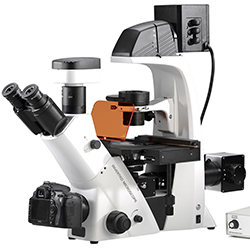
A16.2615-L-4 Inverted LED Fluorescent Microscope, Trinocular, B/G/U/UV ● 3 Holes Fluorescent Slide + 5W LED Fluorescent Illumination |
|
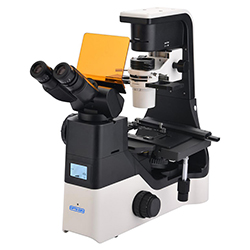
A16.1065 Inverted LED Fluorescent Microscope, B,G,U, Info LCD ● Brand New Design 2019 High Level Inverted Fluorescent Microscope |
 |
|
● Motorized Fluorescent Microscope ● |
|
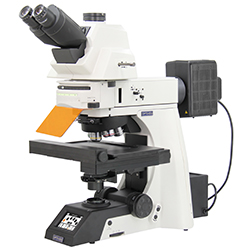
A16.1095 Upright Fluorescent Microscope, Semi-APO, Full Motorized ● Full Motorized Research Level Fluorescent Microscope With 6 Position Turret Disc Epi-Fluorescent Illuminator |
 |
|
|
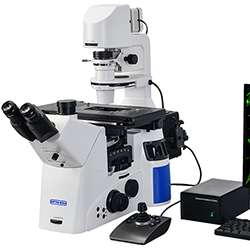
A16.1098 Full Motorized Inverted Fluorescent Microscope, Semi-APO, BF/PH/PL/FL/DIC ● Research Level Full Motorized Inverted Fluorescent Microscope For BF/PH/FL/DIC |
|
● Stereo Fluorescent Microscope ● |
|
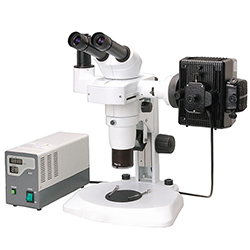
A23.1001-F Fluorescent Zoom Stereo Microscope ● Binocular, EW10x/22, Transmit & Reflec LED,100W Ultra hi-voltage spherical mercury lamp |
 |
|
|
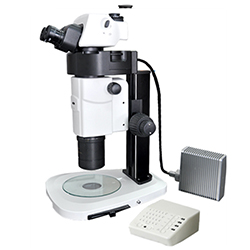
A23.1008-F Parallel Zoom Flourescent Stereo Microscope, 0.75x-13.5x, 1:18, APO, Upper & Bottom Light ● Parallel Stereo Microscope With FL, PL, DF, BF/DF, APO Functions |
|
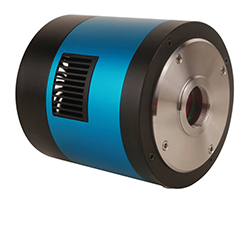
● Digital Camera For Fluorescent Microscope ● |
 |
 |
|
For any further questions or inquires about fluorescent microscopes, you are welcome to contact us at [email protected]. We will be happy to assist in selecting the Best Suit model! |
 |


 Huang Xin