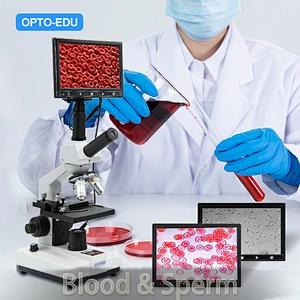
Observe the movement and the shape of blood cells, or view the blood & sperm's activity to examine its quality. Measurement of the blood cell density, or count the cell's number.
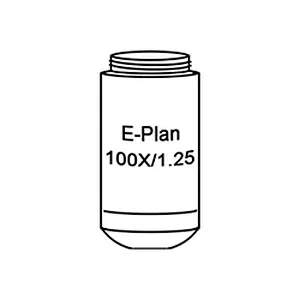
The objective is the most important part of the microscope optical system. As part of the microscope optical system, the objective lens is mainly responsible for collecting the light emitted or reflected by the sample and focusing it to form a microscopic magnification image.
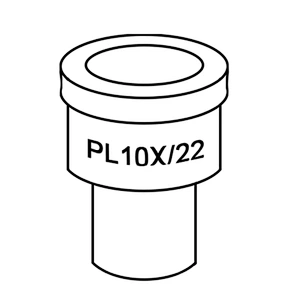
The eyepiece is the lens close to the eye in the microscope optical system, also called the ocular lens. The eyepiece can re-magnify the real image* (intermediate image) magnified by the objective lens so that it can be observed by the human eye. Generally the eyepiece consists of 2-3 groups of lenses, with one (group) lens at the upper end called the "eyepiece" and the lens at the lower end called the "field lens".
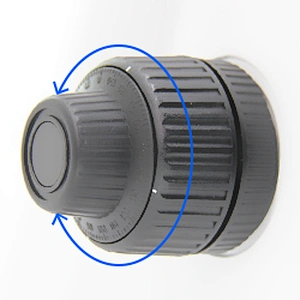
Focusing in a microscope is the process of adjusting the distance between the objective lens and the specimen to make the observed image clear, sharp, and well-defined. It is the most basic and essential operation for using a microscope correctly.
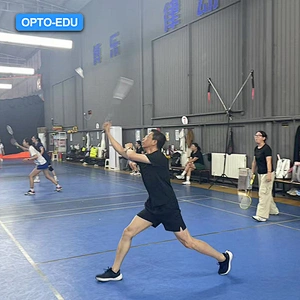
Swing Together, Energize For Win-Win: OPTO-EDU Company\'s Badminton Team Building Event Does Not Take Passion Seriously! \nThe badminton team building in OPTO is in full force. We feel people are totally comfortable. Every hit, every shouts of teammates, even cheers and applause fill the gym.
A11.1316 is the best value entry level biological microscope, especially appreciated when budget is limited. All models are equipped with an integrated X-Y mechanical stage are supplied with an Abbe N.A. 1.25 condenser. Optional WF16X, WF20X eyepiece enable utmost 2000X optical magnification.
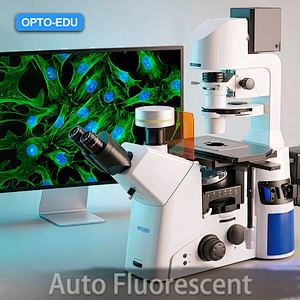
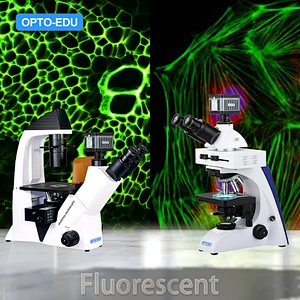
Inverted Fluorescence Microscope is one of the most important tools for today’s Cell Biology Lab. It can let you see live cells in culture dishes just like normal inverted microscopes do, but it also makes finding exactly where certain proteins, parts inside cells called organelles, and even single molecules happen by using special kinds of light that glow – this is known as fluorescence imaging.
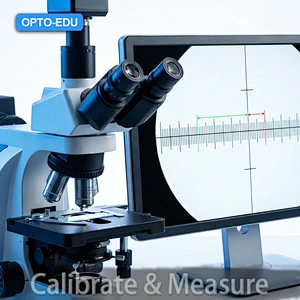
Before you can make precise measurements with a measuring eyepiece or a microscope camera, you must first calibrate each device with a standard called an object micrometer. This calibration establishes the micrometer value, which indicates how large the distance is between two graduations of the micrometer on your specimen.
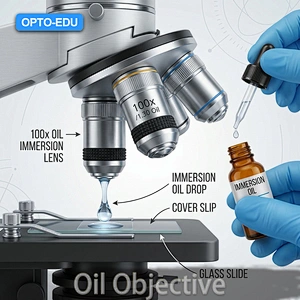
Bacteria are very small of course, so it is necessary to view them at the highest magnification possible with the best resolution possible. In a light microscope this is about 1000x due to optical limitations. The Oil immersion technique is used in order to enhance resolution.
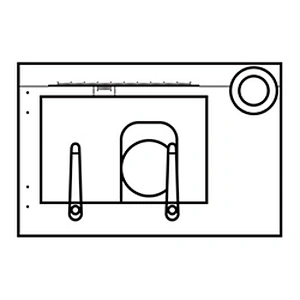
The working stage is a component of a microscope. Located below or above the objective lens, it is used to hold the specimen for observation. Also commonly referred to as a "stage" or "microscope stage," it serves as the platform for placing and securing the specimen to be examined.
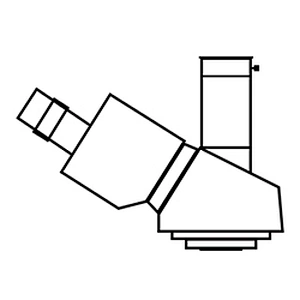
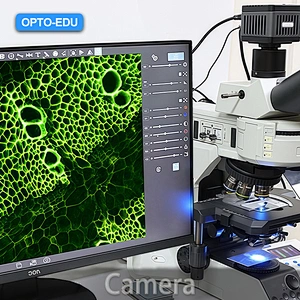
Microscope Camera is an optical instrument specifically designed to be combined with a microscope to capture microscopic images. It is an input device developed specifically for microscopes, which connects to the microscope\'s trinocular tube via an adapter, converts optical images into electrical signals through an image sensor (CCD or CMOS), and then transmits them to a computer for processing and display.
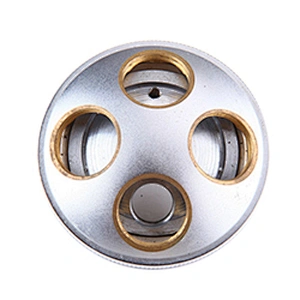
The nosepiece of microscope is a rotating turret that holds the objective lenses. It is located above the stage and below the eyepiece of the microscope. The objective lenses are attached to the nosepiece and can be rotated into position above the specimen on the stage by turning the nosepiece.
Microscope Camera software is used to control microscope cameras, capture images, and perform image processing and analysis. \nThese software typically offer a wealth of features that enable users to obtain high-quality microscopic images for further analysis.
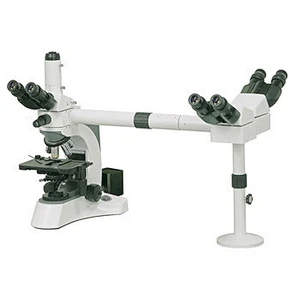
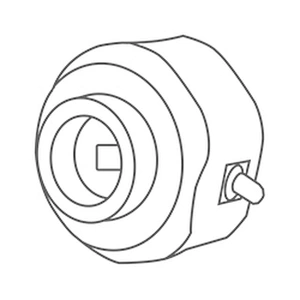
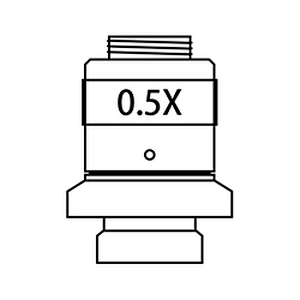
The origin of "C" in C Mount is the initial letter of "cinema". On the eyepiece tube, the coupling of optical microscope and digital imaging equipment is realized.\nFor some complex microscopes that require multiple cameras, there may also be multiple C Mount connection ports.
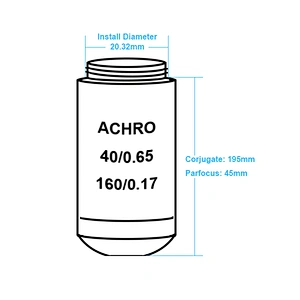
Besides the marks on the objective or specification table of microscope, there are several important "hidden" parameters of microscope objective, which you need to know: Parfocal, Tube Length, and Screw
n today's rapidly evolving microscopy landscape, selecting the right digital camera is critical. Leveraging two decades of specialization in optical instrumentation and imaging technology, Opto-Edu offers a comprehensive portfolio of microscope cameras engineered for diverse applications. This guide streamlines your selection process to identify the optimal 2026 solution for your workflow.
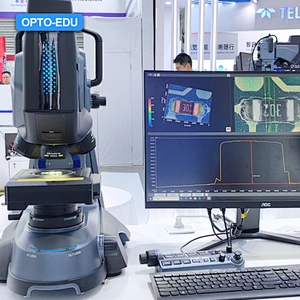
The highly anticipated China Laser and Optoelectronics Expo will be held from March 18th to 20th, 2026 at the Shanghai New International Expo Center. As the largest international optoelectronic event in Asia, it gathers the world\'s top optoelectronic manufacturers to showcase their most exciting achievements. The OPTO-EDU team participated in this event, engaging in the development of new industries and expanding international business cooperation.
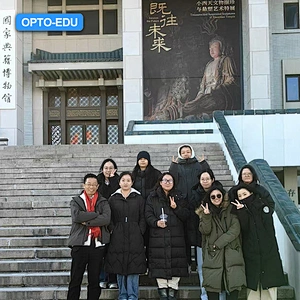
These fast times are times we sometimes need to slow down, and see history and the pulse of technology. All OPTO-EDU members showed up at the National Library of China for a special cultural team building. We entered “Past and Future · Xiaoxitian Cultural Relics and Suspended Sculpture Art Exhibition” in the spirit of “craftsmanship” or “innovation” with artifacts and light.
In order to deepen team integration, create new morale, and develop a positive, productive workplace culture, OPTO-EDU organized a “Journey Through Sea and City” team-building retreat in November 2025. Employees left their normal work to explore the beautiful sea and city of Pingtan Island and the culture of Fuzhou (the perfect combination of natural beauty and nostalgia).
We use cookies on our website to see how you interact with it. By accepting, you agree to our use of such cookies. privacy policy
Advanced Cookie Settings
Essential Cookies
These cookies enable core functionality such as security, verification of identity and network management. These cookies can’t be disabled.
Enable Marketing Cookies
These cookies are used to track advertising performance, consent to the sending of advertising-related user data to Google, and consent for the website to serve personalized advertising to provide more relevant services.
Enable Functional Cookies
These cookies collect data to remember choices users make to improve and give a more personalised experience.
Enable Analytics Cookies
These cookies help us to understand how visitors interact with our website, discover errors and provide a better overall analytics.




 English
 Pусский
 Français
 Español
 Portugues
 Deutsch
 lingua italiana
 العربية
 Melayu
 Filipino
 Монгол хэл
 dansk
 Bahasa indonesia
 日本語
 한국어
 Türk dili
 Tiếng Việt
 svenska
 Nederlands
 Norsk språk


 Huang Xin